
Frizzy Dreads: Why It Happens and How to Fix It
Updated November 2026 · By Linda, founder of Mountain Dreads
The short answer: A little frizz is a normal part of having dreads, especially while they're forming and after washing. To make them less frizzy, palm roll, crochet gently, use a residue-free tightening product, wear a headband, and protect your hair while you sleep.
Frizz is part of every dread journey at some point. I've had dreads for over 15 years, and I still have frizzy days. There are a few simple remedies that help keep your dreads looking neat and settled.
Why do dreads get frizzy?
While dreads are forming they tend to be a little more frizzy, but this settles down as they mature. You may also notice more frizz after washing, or when it's been a while between maintenance. Friction from your pillow can add to it too. Not all hair textures loc up the same.
Growing freeform dreads? Some frizz is part of the look. These tips still help whenever you'd like a neater finish.
5 ways to fix frizzy dreads
1. Palm roll after washing
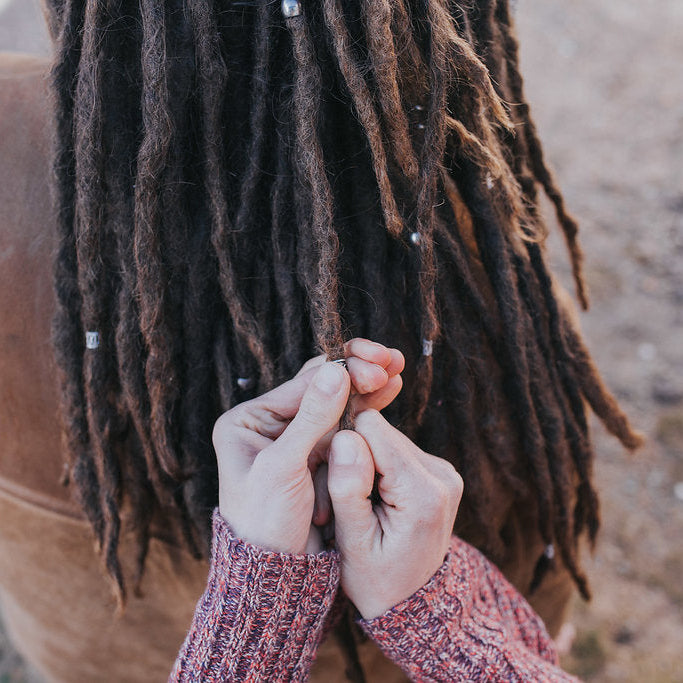
Straight after washing is the best time to palm roll your dreads, but you can do it at any time. Place a dread between your palms and roll back and forth, moving up and down so you cover the whole length.
If your dreads are new or have a lot of loose hairs, palm rolling is an easy way to help them form and keep the hair inside the dread. You can palm roll with just your hands, or with a natural tightening gel.

2. Crochet in loose hairs
A crochet hook tucks stray hairs back into each loc. Keep it gentle and only crochet when you need to.

New to crochet? Our guide, How to Use a Crochet Hook for Dreadlock Maintenance, covers hook sizes, technique and how often to crochet.
Shop: Crochet Hooks for Dreadlocks | Set of 2
3. Use a natural tightening product
Both Dollylocks and Raw Roots make products that help tame the frizz. Apply a tightening gel or spray straight onto the hair, or combine it with palm rolling to help control frizz and flyaways. Whatever product you choose, make sure it's residue-free, because leftover residue can get trapped inside your dreads and slow down the locking process.
Raw Roots Aloe Manuka Tightening Gel
"Aloe Manuka Gel is luxurious gel for frizzy hair, curls and dreadlocks." After washing and towel-drying, apply a small amount between your palms and roll it into your dreads.
Dollylocks Tightening Texture Spray
Designed to tighten dreadlocks, strengthen hair, nourish the scalp and help prevent dandruff. Shake well, then hold at arm's length and spray onto wet or dry hair.
"My hair when washed goes very fluffy & this spray is my saving grace, I love it & it smells divine." (Meg)
Dollylocks Tightening Serum
A flake-free treatment with coconut water and aloe vera to tame loose flyaways while keeping hair hydrated. Rub a small amount between your palms and apply from roots to ends, one section at a time.

4. Wear a headband
A headband is my favourite way to deal with frizz and flyaways. It's a quick get-ready option that covers the frizz at your roots and hairline. Most of our headbands are known for staying in place, just read the reviews.

Shop: Cotton Tie Up Headband · Double Loop Cotton Headband · All headbands
Or we have satin-lined headwear, with a smooth lining that means less friction against your hair, so there's less frizz to begin with.
5. Protect your dreads while you sleep
Your pillow rubs against your hair as you sleep. A silk pillowcase or satin-lined sleep sock gives a smoother surface, which means less friction and less frizz.
Shop: Satin Lined Bamboo Dreadlock Sleep Tube · Silk Pillowcase · All sleep socks
Our guide on how to sleep with dreads shows which option suits your length.

"It's been a much nicer sleep for me having my dreads tied back. Thank u for the simple but effective way to make me comfy! And my dreads happy and less frizzy!" (Bec)
Embrace a little frizz
Frizz isn't something to fight. It's part of every dread journey, and a little softness around the edges is part of what makes your dreads yours.
How to stop locs from frizzing: FAQs
Are dreads supposed to be frizzy?
Yes, especially early on. New dreads often have lots of loose hairs for the first few months, and they become more compact as they mature. Some frizz is normal at any stage.
Why are my locs so frizzy?
Frizzy locs are common when they're young, freshly washed, or when it's been a while between maintenance. Friction from your pillow can add to it, and not all hair textures loc up the same.
When do starter locs stop being frizzy?
There's no set timeline. Starter locs usually have the most loose hairs in the first few months, then gradually tighten as they mature. Your hair texture and routine both affect how quickly that happens.
Why are my dreads frizzy after washing?
Many people notice more frizz straight after washing, which is why it's the best time to palm roll. Rinse your shampoo out thoroughly too, because leftover residue can slow down locking.
How can I keep my dreads from frizzing overnight?
Sleep on a silk pillowcase or in a satin-lined sleep sock. The smoother surface reduces friction against your hair.
Shop all Remedies for Frizzy Dreadlocks

Written by Linda Hollier